This blog explains the fundamentals of the domain name system, which is an.often overlooked component of the Web’s infrastructure, yet is crucial for nearly.every networked application. Many attcks, such as fast-flux and DNS application, take advantage of weaknesses in the DNS. design that emphasize efficiency over security.
DNS is a fundamental piece of the internet architecture. Knowledge of how the DNS work is necessary to understand how attacks on the system can affect the internet as a whole and how criminal infrastructure can take advantage of it.
The internet protocol is the core. protocol the internet users. Each compter with internet access has an assigned IP.address so that other system can send traffic to it. Each IP address consists of four numbers between 0 and 255.separated byperiods,suchas74.125.45.100.These.
number are perfect for computers that.always deal with bits and bytes but are not easy for humans to remember.To solve this problems, the DNS wasinvented in 1983 to create easy-to-remember names that IP address.
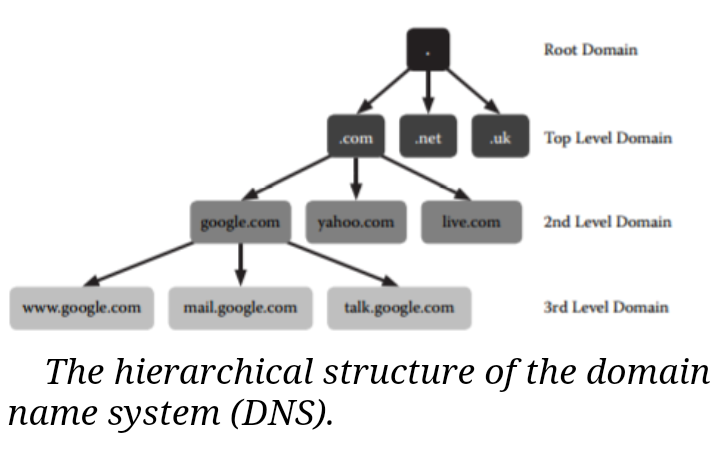
The primary goal that the designers the DNS had in mind was scalability. This. goal grew from the failure of the previous solutions that required each user to download multithousand-line file named bosts.txt from a single server. To create a truly scalable system, the designers choseto create a hierarchy of “domains”. At the top of the hierarchy is the “root” domain under which all other domains(TLD) that break up the major categories of domains such as .com, .gov, nd the country code. TLDs. Below the TLDs are second-level. domain that organizations and individual can register with the registry that manages that TLDs. Below second level domains are the third-leve domains and so forth, with a maximum of 127 levels.This picture shows how the hierarchical nature of the DNS leads to a tree-like structure consisting of domains nd subdomains.
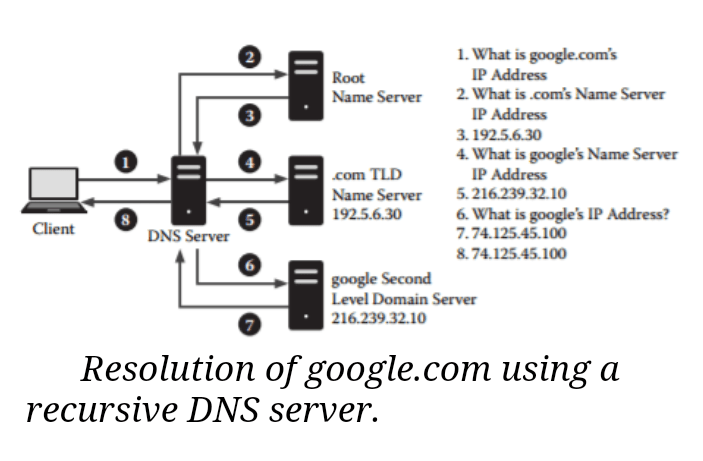
The most common way for systems to resolve domain names: by contacting a recursive DNS server and allowing it to do the work. A nonrecursive resolver will only make a single requests to a server,expecting the complete answer back.Recursive resolvers follow the chain of domains, requesting the address of each.name server as necessary until reaching. the final answer. Using recursive DNS.servers also make the system much more efficient due to caching. Caching occur. when a DNS server already knows what the answers to a question is, so it does no need to look it up again before responding to the query. The addresses of the root server and the .com server are usually
cached due to the frequency with which system request them.
 RED ZONE